
Maggot Fishing in Winter: The Complete Guide
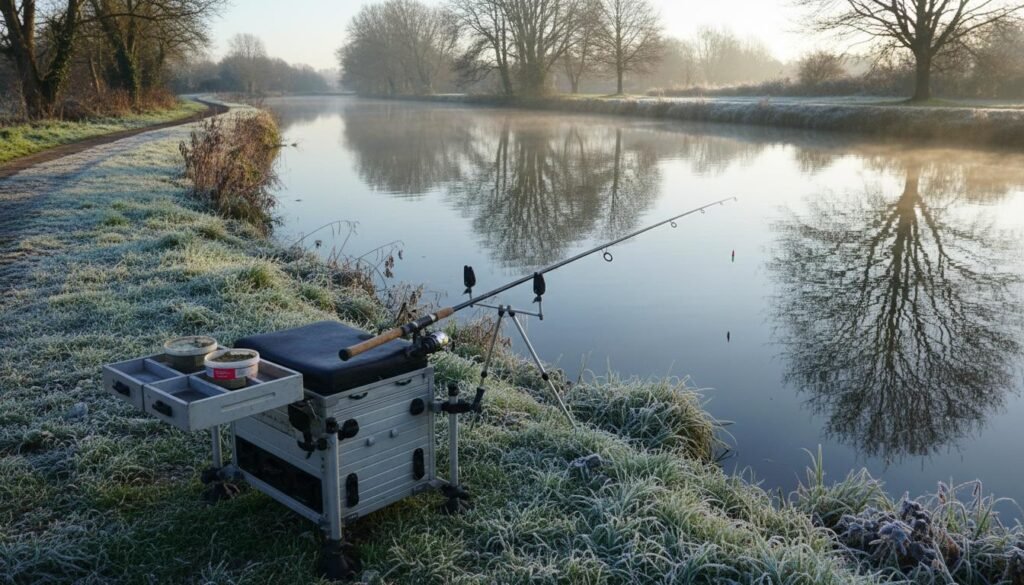
Maggots are the most reliable winter bait in coarse fishing. They wriggle, they’re visible, they’re easy for lethargic fish to digest, and everything in the lake eats them. Fish them on a size 16 to 20 hook, feed ten to twenty maggots little and often, and you’ll get bites on days when boilies and pellets sit untouched.
Why maggots win when it’s cold
Cold water slows a fish’s metabolism right down. Big baits become too much effort to deal with, but a maggot is a tiny, moving, easily digested mouthful that fish will pick up even on the hardest days. Roach, perch, skimmers, chub, tench and carp: nothing refuses a maggot in winter. That’s not romance, it’s just what happens.
Red, white or bronze?
In winter we’d start on reds nine times out of ten. They stand out against a dark bottom and seem to pull more bites from roach and perch. Whites come into their own over silt and in clearer water, and bronze is the traditional river choice for chub and dace. Buy a pint of mixed if you can’t decide, the fish will soon tell you.
Keep them fresh or don’t bother
A fresh maggot wriggles; a stale one lies there and fishes about half as well. Keep them in the fridge in a ventilated bait box with a dusting of maize, and riddle off the dead skins and sawdust before each session. Looked after, a pint keeps a week to a fortnight. If the maggots have turned to casters in the box, that’s not a disaster, casters are a cracking bait in their own right.
Feed little and often, then halve it
The biggest winter mistake is feeding like it’s July. Start with ten to twenty maggots a cast, flicked or catapulted on top of the float. If bites come, keep that rhythm. If they slow, feed less, not more. In cold water you’re trying to keep two or three fish interested, not a shoal of hundreds. You can always add bait; you can never take it out.
Two simple approaches that cover everything
On the float: a light waggler, hooklength around 2.5 to 3lb, and a size 18 with a single red maggot (go to a 16 with double maggot if better fish turn up). Dot the float right down, winter bites can be a whisker. Everything you need is in our floats and shots range and match hooks section.
On the feeder: a small maggot feeder, a short hooklength and the same small hooks. Cast to the same spot every time, a clipped-up line builds a tight patch of feed that winter fish will settle on. Our pole versus feeder guide helps you pick an approach, and the coarse and match department has the rest.
A winter edge for carpers
Carp anglers shouldn’t look down on the humble maggot either. A bunch of maggots on a maggot clip, fished over a small patch of feed, is one of the deadliest cold-water carp tactics going. When the boilie rods are quiet, it gets picked up.
FAQs
How long do maggots keep?
A week to a fortnight in a fridge in a ventilated box. Riddle them regularly and they’ll stay lively to the last.
Single or double maggot on the hook?
Single on a size 18 to 20 for shy winter bites; double on a 16 when better stamp fish arrive. Hook the blunt end, barely nicking the skin, so it keeps wriggling.
Do carp take maggots in winter?
Readily. A maggot clip or a few real maggots tipping a fake offering catches carp all winter, often when nothing else moves.
Where can I get fresh maggots near Haverhill?
From us. We keep live bait in the shop at 4 Queen Street, give us a ring on 01440 810120 to check what’s in before you set off.
Off out this weekend? Pop in for a pint of reds, a few hooklengths and an honest word on where they’ve been biting locally. That’s what we’re here for.